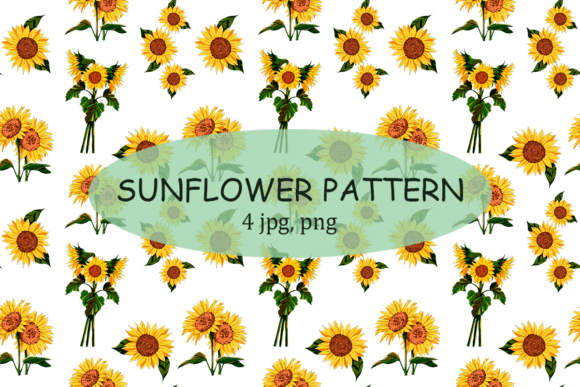
Unlocking the Potential of Sunflower Pattern for High-Resolution Creative Projects
In the realm of graphic design and digital art, few motifs capture the essence of nature's geometry as effectively as the Sunflower Pattern. This specific design element transcends simple decoration; it represents a convergence of mathematical precision and organic beauty. For professionals and hobbyists alike, the availability of high-fidelity variations is crucial. The current offering provides four distinct iterations of this classic motif, delivered in both PNG and JPG formats with massive dimensions ranging from 5000×5000 to 10000×10000 pixels at a crisp 300 DPI resolution.
This level of detail is not merely a technical specification but a functional requirement for serious production work. When evaluating resources for large-scale printing or intricate surface applications, the difference between a standard web image and a 300 DPI masterpiece becomes the defining factor between a professional finish and a pixelated failure. Understanding how to leverage these files requires looking beyond the visual appeal and considering the practical implications of file size, format, and application context.
The Distinctive Nature of High-Resolution Sunflower Patterns
The core strength of this particular Sunflower Pattern collection lies in its scalability. Unlike vector-based designs that rely on mathematical curves, these are raster images prepared at such an extreme resolution that they can withstand significant resizing without losing integrity. The 10000×10000 pixel option, in particular, offers a canvas vast enough to cover large surfaces while maintaining the fine texture of the petals and the central disk.
What makes this pattern distinct from generic floral backgrounds is the fidelity of the details. At 300 DPI, the transition from the bright yellow rays to the deep brown center retains subtle gradients and textures that lower-resolution images simply cannot replicate. This distinction is vital when the end product involves close inspection. A pattern that looks acceptable on a small phone screen may reveal jagged edges or muddy colors when printed on a large banner or a textured fabric. These files are engineered to prevent those common pitfalls, ensuring that the natural complexity of the sunflower remains intact regardless of the output medium.
Comparing Raster Formats: PNG vs. JPG for Floral Designs
When working with the provided Sunflower Pattern files, users are presented with two primary formats: PNG and JPG. While they may appear identical at first glance, their underlying structures dictate different use cases based on the project requirements.
- PNG (Portable Network Graphics): This format is ideal when transparency is required or when preserving maximum color depth is critical. If you intend to overlay the sunflower pattern onto a dark background, a complex illustration, or a product mockup where the edges need to blend seamlessly, the PNG version is the superior choice. It supports lossless compression, meaning every pixel detail remains exactly as intended without the artifacts often introduced by other methods.
- JPG (Joint Photographic Experts Group): Conversely, the JPG format is optimized for smaller file sizes while maintaining high visual quality. For projects where the pattern will fill a solid background, such as a full-page print layout or a t-shirt sublimation design, the JPG is often more efficient. It handles continuous tones and gradients exceptionally well, which suits the organic flow of sunflower petals.
The decision between these two depends largely on the workflow. Designers working with layer-heavy software like Adobe Photoshop or Illustrator might prefer the flexibility of PNGs, whereas those preparing final print-ready files or web assets that require faster loading times might lean towards the compressed efficiency of JPGs.
Evaluating Use Cases and Application Scenarios
The versatility of a 300 DPI Sunflower Pattern allows it to fit into a wide array of commercial and personal applications. However, not all patterns are suitable for every surface. Evaluating the specific needs of your project is essential before selecting a file.
Apparel and Textile Printing
For businesses producing custom apparel, the Sunflower Pattern serves as an excellent base for t-shirts, tote bags, and scarves. The high resolution ensures that the design does not break down when stretched over the curvature of a garment. Sublimation printing, in particular, benefits from the 10000-pixel width, allowing for seamless repeats across large fabric rolls. The key here is the color vibrancy; the high DPI ensures that the yellows remain saturated and do not fade into gray during the heat transfer process.
Small-Scale Merchandise
Products like phone cases, stickers, and business cards present a different challenge. While these items are physically smaller, they require intense detail because they are held close to the eye. A low-resolution pattern would look blurry on a glossy phone case. The 5000×5000 pixel version of the Sunflower Pattern is perfectly suited for this, providing ample data to create sharp, crisp edges even on tiny surfaces. The ability to zoom in on the center of the flower without seeing pixelation adds a premium feel to the final product.
Large Format and Environmental Graphics
Perhaps the most demanding application is large-format printing, such as wall murals, banners, or window decals. In these scenarios, the 10000×10000 pixel resolution becomes indispensable. Standard images often become unusable once scaled up, resulting in visible blockiness. With these files, designers can expand the pattern to cover entire walls or vehicle wraps while maintaining the illusion of a continuous, high-quality image. The 300 DPI standard guarantees that the viewer sees a smooth, professional texture rather than a digital approximation.
Tradeoffs and Limitations in Pattern Selection
While the Sunflower Pattern files offer impressive specifications, there are tradeoffs to consider when integrating them into a broader design ecosystem. The most immediate factor is file management. Images at 10000×10000 pixels are substantial in size. Depending on the compression settings, a single file can be several hundred megabytes. This can slow down rendering times in older hardware or make file transfers cumbersome if bandwidth is limited.
Another consideration is the rigidity of raster images compared to vectors. If a designer needs to manipulate individual elements within the pattern—such as rotating a single petal or changing the color of just one section—a raster image limits this flexibility. Once the image is flattened, editing is restricted to filters and adjustments rather than structural changes. For projects requiring frequent, granular modifications, a vector source might have been a better starting point, though it lacks the photorealistic texture that these high-res rasters provide.
Furthermore, color mode is a critical factor for physical printing. Most high-resolution digital files are created in RGB (Red, Green, Blue) color space, which is optimized for screens. Professional printers, however, typically require CMYK (Cyan, Magenta, Yellow, Key/Black) profiles to ensure accurate color reproduction on paper and fabric. Users must verify whether the provided files are in the correct color profile or if a conversion step is necessary to avoid unexpected shifts in the yellow hues of the sunflowers during the printing process.
Decision Factors: When to Choose This Resource
Selecting the right asset for a project involves balancing quality, cost, and usability. The Sunflower Pattern described here is the optimal choice when the priority is visual fidelity and scale. If your project demands a design that looks natural and detailed under magnification, or if you need to print on diverse materials ranging from rigid plastic to soft fabric, these files provide the necessary foundation.
However, if your project is strictly for low-resolution digital display, such as a thumbnail icon or a social media story background, the massive 10000-pixel dimensions are overkill. In such cases, a smaller, optimized version would suffice and save storage space. Similarly, if the design requires a flat, illustrative style rather than a realistic texture, a vector illustration might be more appropriate than a high-resolution photograph.
The inclusion of four distinct patterns in both PNG and JPG formats adds a layer of strategic value. It allows for experimentation without the need to purchase multiple separate assets. Designers can test the same motif in different styles or compositions to see which best fits their brand identity or product line. This variety supports a comparative approach to design, enabling creators to find the perfect balance between artistic expression and technical feasibility.
Maximizing Value Through Proper Implementation
To truly leverage the potential of these high-resolution files, attention must be paid to the pre-press and post-production phases. Ensuring that the color profile matches the printer's requirements is non-negotiable for achieving the vibrant results the Sunflower Pattern promises. Additionally, understanding the limitations of the substrate is important; a pattern that looks stunning on glossy paper may behave differently on matte fabric.
By treating these files as professional-grade assets rather than simple clipart, users can elevate the perceived value of their products. Whether creating a line of eco-friendly merchandise or designing a sophisticated interior decor item, the clarity and detail offered by 300 DPI images communicate quality and care. The investment in high-resolution resources pays dividends in customer satisfaction and brand reputation.
In conclusion, the Sunflower Pattern collection represents a robust solution for modern design challenges. Its combination of massive dimensions, dual-format availability, and high resolution makes it a versatile tool for a wide spectrum of creative endeavors. By carefully weighing the strengths against the limitations and matching the resource to the specific demands of the project, designers can achieve outcomes that are both visually striking and technically sound.