Watercolor Succulent Clipart: Integrating Botanical Art into Your Creative Workflow
In the landscape of digital design and personal organization, few assets offer as much versatility as watercolor succulent clipart. These illustrations are not merely decorative elements; they are functional components that bridge the gap between organic aesthetics and structured planning. Whether you are a small business owner crafting a brand identity, an educator designing lesson materials, or a hobbyist organizing a physical scrapbook, understanding how to integrate these high-quality PNG files into your existing workflows is essential for efficiency and consistency.
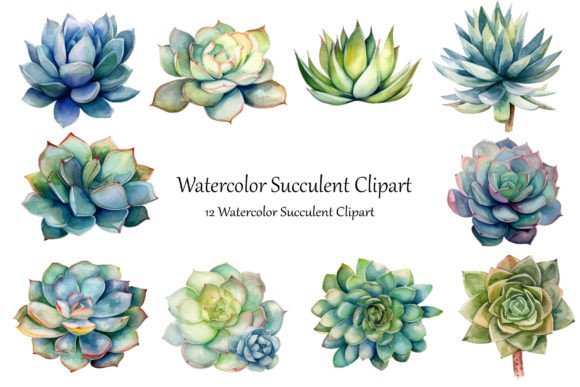
The specific set described here, featuring 12 distinct watercolor succulent illustrations, offers a unique advantage due to its technical specifications. With resolutions of 2400×2400 pixels and transparent backgrounds, these files are engineered for immediate deployment across various mediums. This eliminates the tedious process of manual masking or background removal, allowing creators to focus on the strategic application of design rather than the technical cleanup of assets. The transition from a raw concept to a finished product becomes significantly smoother when the foundational graphics are already optimized for transparency and high fidelity.
Strategic Integration in Digital Workflows
For professionals working in web design or digital marketing, the implementation of watercolor succulent illustration assets requires a clear understanding of file compatibility and usage rights. When building a website or creating social media graphics, the visual tone often dictates user engagement. Watercolor textures provide a soft, approachable feel that contrasts effectively with sharp typography and geometric layouts. By incorporating these 12 transparent PNGs, designers can layer succulents over solid colors, gradients, or photographic backgrounds without worrying about white boxes interfering with the composition.
The high resolution of 2400×2400 pixels ensures that these images remain crisp whether they are displayed on a retina display or printed on large-format banners. In a practical workflow, this means you can use the same asset for a mobile app icon and a desktop hero image without needing to source different versions. This consistency is crucial for maintaining brand integrity. When preparing assets for a client, having a library of pre-resized, transparent botanical elements saves hours of production time. You can drag and drop these files directly into software like Adobe Illustrator, Canva, or Procreate, instantly elevating the visual quality of the project.
Beyond static images, these files serve as dynamic elements in video content creation. Marketers can animate the leaves of a succulent to create subtle motion graphics for Instagram stories or YouTube intros. Because the background is transparent, the animation blends seamlessly into any scene, adding a touch of nature without requiring complex compositing techniques. This level of integration allows for a more cohesive narrative, where the visual language supports the message rather than distracting from it.
Physical Production and Craft Implementation
The utility of watercolor succulent clipart extends far beyond the screen. For entrepreneurs producing physical goods, such as planners, stickers, or home decor items, the preparation phase is critical. The transparent background feature is particularly valuable here. When designing a sheet of planner stickers, the ability to place a succulent exactly where needed without clipping out a square around it ensures a professional finish. This precision reduces material waste and streamlines the cutting process for die-cut machines.
When moving from digital design to fabric printing or stationery, color management becomes a primary concern. Watercolor art relies heavily on subtle shifts in hue and saturation. Before sending files to a printer, it is advisable to convert the RGB PNG files to CMYK if the final output will be physical. However, the high pixel count of this set provides ample data to work with during conversion, minimizing the risk of color banding or loss of detail. This foresight prevents costly reprints and ensures that the soft edges of the watercolor technique translate accurately to paper or textile.
Crafters and scrapbookers also benefit from the versatility of these assets. In a traditional scrapbooking workflow, digital prints are often used to create custom journaling cards or embellishments. A designer might print multiple copies of a single succulent image on cardstock, cut them out, and layer them to create depth. Alternatively, the images can be transferred onto fabric using heat transfer paper for custom tote bags or pillowcases. The variety within the set of 12 allows for thematic consistency; one can select three similar tones to represent a specific season or mood, ensuring the final collage feels curated rather than random.
Organizing Assets for Long-Term Efficiency
To maximize the value of this collection, proper organization is key. For freelancers and agencies managing multiple clients, a chaotic folder structure can lead to wasted time searching for specific assets. A recommended workflow involves categorizing the 12 PNG files by color palette or plant type. Creating subfolders labeled "Green Tones," "Pastel Accents," or "Floral Elements" allows for rapid retrieval during tight deadlines. This organizational strategy supports a scalable workflow, making it easier to maintain a consistent aesthetic across different projects over time.
Furthermore, considering the long-term use of these assets, it is beneficial to document their intended applications. If a succulent image was successfully used on a wedding invitation suite, note that in a project log. This record-keeping helps in future pitching processes, where showing past examples of successful implementation builds trust with potential clients. It transforms a simple download into a proven resource that adds measurable value to your service offerings.
Enhancing Communication and Brand Identity
Visual communication is a powerful tool for conveying emotions and values. Watercolor succulent illustration assets often symbolize growth, resilience, and calmness. When used in business cards or letterheads, they subtly communicate a brand's personality without overwhelming the text. For educators, these images can make learning materials more engaging, helping to break up dense text and guide the student's eye through the content. In a classroom setting, a teacher might use these transparent images to create interactive worksheets where students can digitally drag and drop plants into different habitats, blending technology with artistic expression.
The interaction between these assets and other design tools is seamless. They pair exceptionally well with hand-drawn fonts or minimalist sans-serif typefaces. When designing a logo, a single succulent element can serve as a focal point, anchoring the brand mark. In email newsletters, these images act as effective dividers or headers, increasing open rates by adding a personalized, human touch to automated communications. The key is to use them intentionally; every element should serve a purpose in guiding the viewer's attention or reinforcing the core message.
Quality Control and Consistency Checks
Before finalizing any project involving watercolor succulent clipart, a rigorous quality control check is necessary. Verify that the transparency has held up correctly, especially if the file has been saved in formats that support layers. Ensure that the edges of the watercolor washes have not become jagged or pixelated upon resizing. While the original 2400×2400 resolution is robust, scaling down too aggressively can sometimes cause artifacts. Always preview the design at 100% zoom to catch any potential issues before export.
Consistency is another factor that separates amateur results from professional outputs. If a project involves multiple pages or screens, ensure that the lighting direction and shadow placement of the succulents remain uniform. Mixing assets with conflicting light sources can create a disjointed visual experience. By sticking to the provided set of 12 images, which likely share a consistent artistic style and rendering technique, you maintain a harmonious look throughout the entire project. This attention to detail reinforces the perception of quality and professionalism.
Conclusion: A Versatile Tool for Modern Creators
The integration of watercolor succulent clipart into your creative process offers a balance of aesthetic appeal and practical utility. From enhancing digital interfaces to facilitating physical craft projects, these assets adapt to a wide range of needs. By understanding the technical capabilities of the 2400×2400 PNG files and applying them within a structured workflow, creators can achieve higher quality results with greater efficiency. Whether you are launching a new business, organizing your personal life, or simply expressing your creativity, these illustrations provide a reliable foundation for success. Embrace the flexibility of these resources to streamline your operations and elevate the visual impact of your work.